Feeling Disconnected From Your Partner? Why It Happens and What to Do
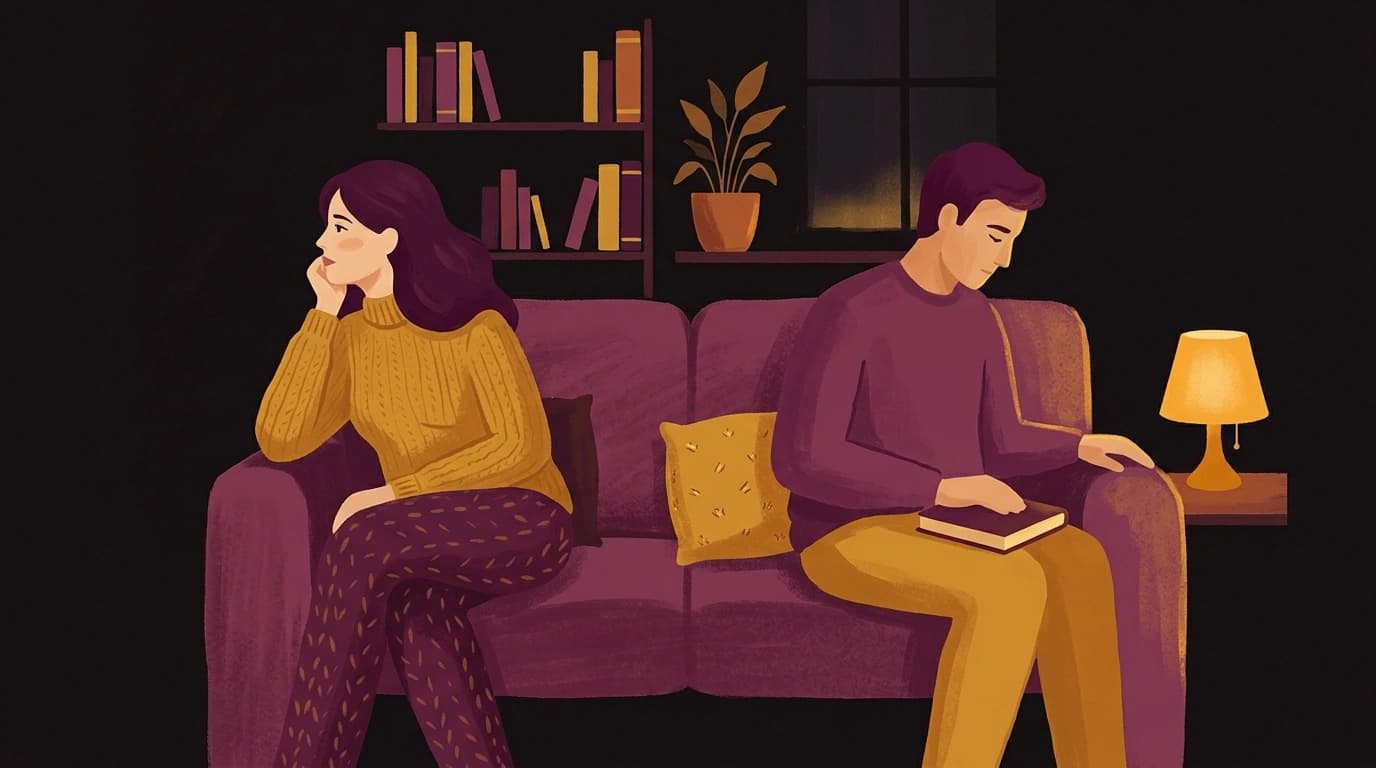
Feeling disconnected from your partner is incredibly common and usually means connection got starved by stress, busyness, or unresolved conflict, rather than that love is gone. It shows up as feeling like roommates, low warmth, or emotional distance. The fix is small, deliberate reconnection: turning toward each other again, real conversation, and naming the drift before it hardens.
You’re in the same house, maybe the same bed, and somehow you feel a continent apart. The conversations are logistics. The warmth has gone quiet. You catch yourself wondering if something is wrong with the two of you, or with you. If that’s where you are, the first thing worth knowing is that this is one of the most common experiences in a long relationship, and it very rarely means what you’re afraid it means.
Feeling disconnected is usually a sign that connection got starved, not that love disappeared. And starved connection can be fed again. Here’s why it happens, what it does and doesn’t signal, and how to start closing the gap.
What emotional disconnection actually feels like
Feeling emotionally disconnected from your partner rarely arrives as a dramatic event. Mostly it’s a slow fade: talking only about tasks and schedules, less physical affection, a sense of living parallel lives under one roof. You might feel more like roommates or co-parents than partners, a little lonely even when you’re together, and unsure when it started. That vagueness is part of what makes it so unsettling. There’s no obvious fight to point to, just a quiet distance that crept in. And because there’s no single event, it’s easy to either ignore it for months or quietly catastrophize it into “we’re falling apart,” when the truth is usually somewhere calmer in between.
Why do I feel disconnected from my partner?
A few usual culprits, often stacked on top of each other:
- Life got loud. Work, a new baby, money stress, or illness pulls your attention away, and connection is the first thing to get deprioritized.
- You stopped turning toward each other. The small everyday bids for attention started going unanswered on autopilot, and the friendship quietly thinned.
- Unresolved conflict. A few fights that never fully healed can make it feel safer to keep a little distance.
- Pure routine. Comfort curdled into autopilot, and you stopped being curious about each other.
- A life transition. Moving, a career change, kids leaving home, or grief can shift how you relate without either of you meaning it to.
Notice what’s usually noton that list: falling out of love. Most disconnection is about attention and habits, both of which you can change. It also usually takes two to drift and two to close the gap, which means this isn’t about assigning blame for who checked out first. The more useful question is simply which of these has been quietly draining your connection, so you know where to aim the effort.
Want to know what your partner secretly wants?
play melt with your partner →Disconnection is not the same as falling out of love
This is the distinction that brings people the most relief. Disconnection feels like distance you both wish weren’t there; you miss each other and want the closeness back. Falling out of love feels more like relief when they’re gone, or a settled indifference. If you’re reading an article about how to feel connected to your partner again, that longing is itself a good sign: the caring is still there, just buried under everything that piled up on top of it. People rarely go looking for ways to reconnect with someone they’ve genuinely stopped loving. The very fact that the distance hurts tells you something important about where you still stand.
How to start feeling connected again
You don’t close the gap with one big talk. You close it with a lot of small reconnections, the same way it opened. That’s actually the hopeful part: because disconnection builds gradually, so does the way back, and you can start today with something tiny rather than waiting for a perfect moment or a grand conversation. A few places to start:
- Rebuild everyday warmth first: a real hug, sitting close, ten minutes of undivided attention with the phones away.
- Turn back toward the small bids for connection you’ve been missing, the “look at this” moments whose sum is most of your friendship.
- Trade one logistics conversation for a real one, about something you don’t already know the answer to.
- Do something new together to break the roommate autopilot.
- Name the drift kindly: “I’ve been feeling far from you, and I miss us.”
For the full step-by-step, our guide on how to reconnect with your partner after a rough patch walks through the whole repair, and building emotional intimacy is the everyday work that keeps the closeness once it’s back.
When it’s worth taking more seriously
Most disconnection responds to effort from both people. It’s worth being honest, though, if the distance runs deeper: if one of you has fully checked out, if there’s contempt rather than just distance, or if the “disconnect” has quietly lasted years despite trying. Those are worth taking seriously rather than waiting out. But where both people still miss each other and are willing to reach, reconnection is very possible, and often the relationship comes back steadier for having gone through it.
One of the hardest parts is simply saying “I feel far from you” without it landing as an accusation. If that feels too vulnerable to raise cold, that’s exactly the gap melt is built for: you both answer privately and only see where you match, so the conversation starts from common ground instead of blame. Feeling disconnected isn’t the end of a relationship, and it isn’t a verdict on the two of you. Very often it’s just the quiet signal that it’s time to start reaching for each other again.
Try melt with your partner
12 questions, answered privately by both of you. Only mutual matches are revealed. Free, anonymous, takes 5 minutes.
play meltfree · anonymous · no account needed

Sex & relationships writer at melt
Coco Vance writes about desire, communication, and the small awkward conversations that make or break a relationship. She's the kind of frank, warm friend who has actually read the research — Gottman, attachment theory, Esther Perel — and translates it into things you can do tonight. She writes for melt, where couples discover what they both want without the awkwardness of asking out loud.
Frequently asked questions
Why do I feel disconnected from my partner?+
Usually because connection got starved rather than lost. Common causes stack up: life got loud (work, a baby, stress, illness), you stopped turning toward each other's small bids for attention, a few unresolved fights made distance feel safer, or comfort curdled into routine. Notice what's usually not the cause — falling out of love. Most disconnection is about attention and habits, both of which you can change.
Is feeling disconnected from your partner normal?+
Very. It's one of the most common experiences in a long relationship, and it rarely means what people fear it means. Connection naturally dips during busy or stressful seasons, and if you stop actively tending it, distance quietly creeps in. Feeling it doesn't mean your relationship is failing — it usually means it's time to deliberately reconnect, which is very doable.
What's the difference between disconnection and falling out of love?+
Disconnection feels like distance you both wish weren't there — you miss each other and want the closeness back. Falling out of love feels more like relief when they're gone, or a settled indifference. The fact that the distance bothers you and you're looking for ways to fix it is itself a good sign: the caring is still there, just buried under everything that piled on top of it.
How do I feel connected to my partner again?+
Through many small reconnections rather than one big talk. Rebuild everyday warmth first (a real hug, undivided attention, phones away), turn back toward the small bids you've been missing, trade a logistics conversation for a real one, do something new together, and name the drift kindly ('I've missed us'). Closeness rebuilds in a hundred small turns toward each other, which slowly makes the deeper conversations possible again.
When should I worry about feeling disconnected?+
When the distance runs deeper than a rough patch: if one partner has fully checked out, if there's contempt rather than just distance, or if the disconnect has lasted years despite genuine effort. Those are worth taking seriously rather than waiting out. But where both people still miss each other and are willing to reach, reconnection is very possible — and the relationship often comes back steadier for it.
Read next
- How to Reconnect With Your Partner After a Rough PatchHow to reconnect with your partner after a rough patch: why couples drift, how to rebuild closeness in small steps, and when it's more than a rough patch.
- Emotional Maturity in a Relationship: 20 Signs (and How to Grow It)Emotional maturity in a relationship: what it is, 10 signs of emotional maturity and 10 of immaturity, why it matters more than chemistry, and how to build it.
- Hold Me Tight: Sue Johnson's 7 Conversations for CouplesHold Me Tight by Sue Johnson, explained: why most fights are a protest of disconnection, the demon dialogues that trap couples, and the 7 conversations.