How to Be More Affectionate in a Relationship
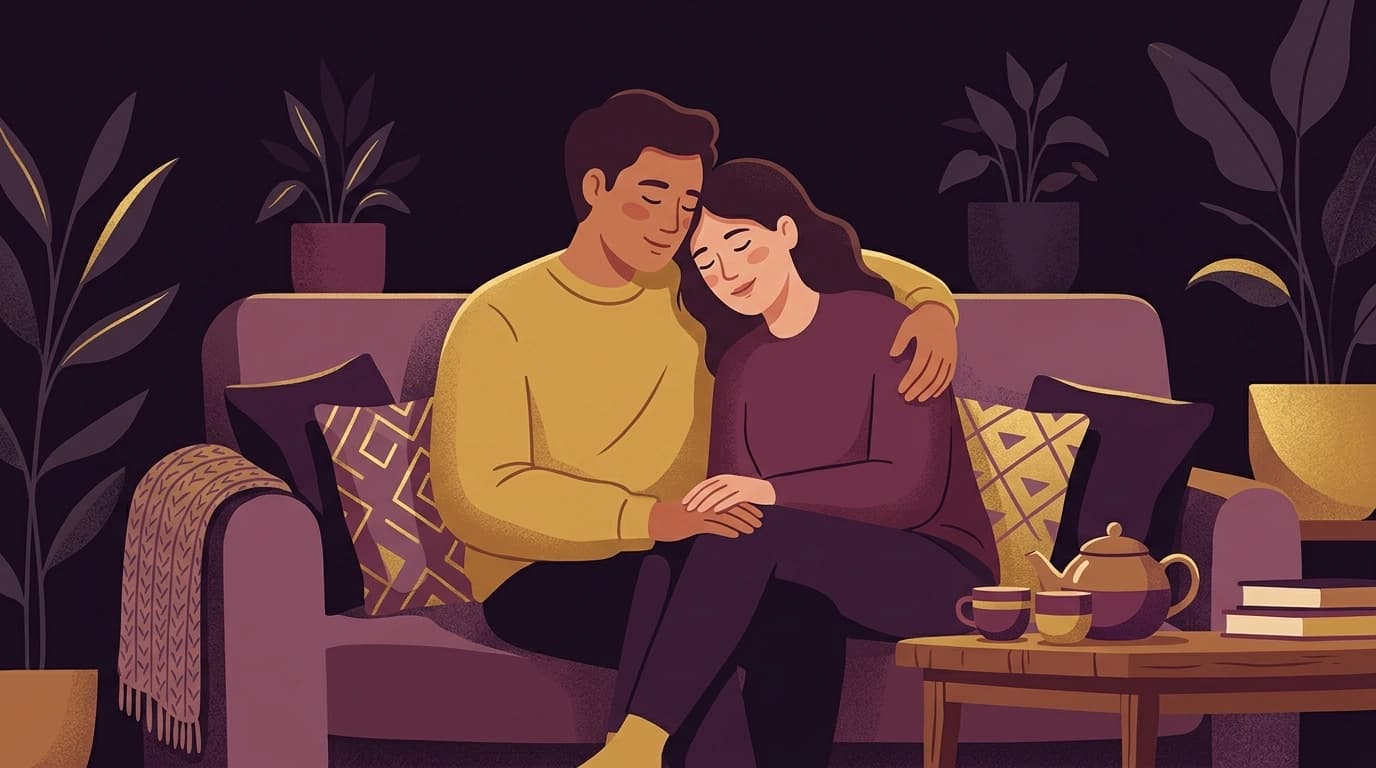
To be more affectionate in a relationship, start small and daily rather than waiting to feel spontaneous: a hand on the back, a real hug, a specific compliment, an unprompted 'I love you.' Affection is a habit you can build, and it grows the more you do it — especially once you learn which kind your partner actually feels loved by.
Some people are natural hand-holders, shoulder-squeezers, and “I love you”-sayers. Others love their partner just as deeply and somehow freeze up at the warm gesture, leaving the other person quietly wondering where the warmth went. If you’ve ever thought “I do love them, so why is this hard for me,” you’re not cold and you’re not broken. Affection is a skill, and like any skill, some of us just never got much practice.
The good news is that it’s very learnable, and it doesn’t require a personality transplant. It requires small, repeated, slightly-awkward-at-first gestures until they stop feeling awkward. Here’s how.
Why some people struggle to be affectionate
Usually it’s learned, not chosen. If you grew up in a house where nobody hugged or said the warm things out loud, affection can feel foreign or even exposing as an adult, no matter how much you feel inside. For others it’s an avoidant lean in their attachment style, where closeness itself trips a quiet alarm. And sometimes it’s just self-consciousness: the gesture feels cheesy, or you’re afraid of doing it “wrong.” None of that means you don’t love your partner. It just means the expression got stuck, and expression is the part you can practice.
The four kinds of affection
Affection is wider than physical touch, which is good news if hugging on command feels like a lot. There are at least four channels, and you can lean on whichever comes easiest while you stretch the others. Most people are fluent in one or two and rusty in the rest, so the goal isn’t to master all four overnight; it’s to notice which ones you skip entirely and add a little there:
- Physical. The non-sexual kind especially: a hand on the back, a real hug, sitting close, a hand on the knee while you talk.
- Verbal. Saying the warm thing out loud: “I’m proud of you,” “I missed you,” a specific compliment instead of a generic one.
- Acts. Affection you do: bringing them coffee, handling a chore they dread, a small unprompted favor that says “I was thinking of you.”
- Presence. Undivided attention: phone down, really listening, choosing to be in the room with them instead of near them.
Want to know what your partner secretly wants?
play melt with your partner →How to build the habit when it isn’t natural
The trick is to stop waiting to feelspontaneously affectionate and just start being it, small and often. Feelings tend to follow actions here, not the other way around — the hug creates the warmth as much as the warmth creates the hug. Waiting until you’re overcome with the urge is how years slip by with the gesture never made. A few ways in:
- Attach it to a routine: a real hug at every hello and goodbye, not a distracted half-one.
- Start with the easiest channel for you (maybe acts or words) and let it warm up the harder ones.
- Send the affectionate text you’d normally just think. Text lowers the stage fright.
- Narrate the warm thought instead of keeping it in: “you looked really happy just now, I liked seeing it.”
- Touch in passing: a hand on the shoulder as you walk by costs nothing and adds up.
It willfeel forced at first. That’s normal and temporary; the gesture becomes real by being repeated, the same way a new habit does. Give it a few weeks before you decide it isn’t you.
Match the affection your partner actually wants
Effort in the wrong currency doesn’t land. If your partner most wants to be held and you keep showing love by doing the dishes, you can be trying hard and still leave them feeling untouched, while you feel unappreciated for the effort you aremaking. It’s a quietly painful loop, and it’s almost always a translation problem rather than a caring one. This is exactly what the five love languages are about: find out how your partner most feels loved, and aim your affection there rather than at whatever comes easiest to you. The simplest way to learn it is to ask — “when do you feel most loved by me?” — and actually use the answer.
When there’s an affection mismatch
Sometimes one partner wants far more affection than the other naturally gives, and it becomes a sore spot: one feels starved, the other feels nagged. The way through isn’t for the affectionate one to give up or the reserved one to fake it. It’s to name the gap kindly and meet somewhere real — the reserved partner stretches toward small, consistent gestures, and the affectionate one names what they need specifically instead of hoping it’s obvious. Building emotional intimacy underneath usually makes the physical affection flow more easily, and knowing the difference between the two, which our guide on emotional vs physical intimacy covers, helps you see which one’s actually running low.
If naming what you need out loud feels hard, melt gives you a lower-pressure way in: you both answer privately and only see where you match, so “I wish we touched more” gets surfaced without it sounding like a complaint. Affection isn’t a personality you’re born with or without. It’s a set of small, repeatable choices, and the more you make them, the more natural they feel, until one day you notice you’re the one reaching first without thinking about it. For more of the same, our list of ways to be intimate without sex is full of low-pressure closeness. Start with one hug today. Make it a beat longer than usual, and actually mean it.
Try melt with your partner
12 questions, answered privately by both of you. Only mutual matches are revealed. Free, anonymous, takes 5 minutes.
play meltfree · anonymous · no account needed

Sex & relationships writer at melt
Coco Vance writes about desire, communication, and the small awkward conversations that make or break a relationship. She's the kind of frank, warm friend who has actually read the research — Gottman, attachment theory, Esther Perel — and translates it into things you can do tonight. She writes for melt, where couples discover what they both want without the awkwardness of asking out loud.
Frequently asked questions
How can I be more affectionate in my relationship?+
Start small and daily instead of waiting to feel spontaneous: a real hug at every hello and goodbye, a specific compliment, an unprompted 'I love you,' a hand on the back in passing. Affection is a habit — feelings tend to follow the actions here — so pick the easiest channel for you (touch, words, acts, or presence) and build from there. It feels forced at first and becomes real by repetition.
Why am I not affectionate even though I love my partner?+
Usually it's learned, not a lack of love. If you grew up in a home where nobody hugged or said the warm things out loud, affection can feel foreign or exposing as an adult. It can also come from an avoidant attachment style, where closeness trips a quiet alarm, or plain self-consciousness. The love is there; the expression just never got much practice, and expression is the part you can build.
How do I become more physically affectionate?+
Focus on the non-sexual kind first, since it carries less pressure: a hug that lasts a beat longer, sitting close on the couch, a hand on the shoulder as you pass, holding hands on a walk. Attach it to routines so you don't have to remember, and start with brief, low-stakes touch. It'll feel deliberate at first; give it a few weeks and it starts to feel natural.
What if my partner and I have different affection needs?+
That's common, and the fix isn't for the affectionate one to give up or the reserved one to fake it. Name the gap kindly: the reserved partner stretches toward small, consistent gestures, and the affectionate one asks for what they need specifically instead of hoping it's obvious. Learning each other's love language helps you aim affection where it actually lands rather than where it's easiest to give.
Can you learn to be more affectionate?+
Yes — affection is a skill, not a fixed personality trait. Like any habit, it grows through small, repeated practice: the more you do it, the less forced it feels, until it becomes genuinely yours. The key is to stop waiting to feel spontaneously affectionate and start acting affectionately in small ways, because here the feeling tends to follow the behavior rather than lead it.
Read next
- How to Initiate Intimacy With Your PartnerHow to initiate intimacy with your partner: why it feels awkward, how to start outside the bedroom, send a low-pressure invitation, and handle a no gracefully.
- How to Build Emotional Intimacy (Even With an Avoidant Partner)How to build emotional intimacy: the small risks of vulnerability that create closeness, why it fades, and how to rebuild it, even with an avoidant partner.
- How to Build Sexual Tension (and Get It Back When It Fades)How to build sexual tension through anticipation, not action — and bring the charge back in a marriage or long relationship, without it feeling forced.